Tuesday, January 13, 2026


Execute a Durable Power of Attorney Before It's Too Late

Elise Lampert
The Law Office of Elise Lampert - Probate - Trust and Estate Litigation - Estate Planning -Estate Administration - Financial Elder Abuse - Conservatorships - Elderlaw

Execute a Durable Power of Attorney Before It's Too Late

Takeaways

  • A durable power of attorney can prove critical if you ever lose the ability to manage your own affairs.
  • You must have legal capacity to execute a power of attorney, so it’s important to do it before it’s too late.
  • If you do not have this legal document in place, a court might have to appoint a conservator or guardian who would be granted the power to act on your behalf.

What Is a Durable Power of Attorney?

A durable power of attorney is an extremely important estate planning tool, even more important than a will in many cases. This crucial document allows a person you appoint – your “attorney-in-fact” or “agent” – to act in place of you – the “principal” – for specific purposes when and if you ever become incapacitated due to dementia or some other reason.

The agent under the power of attorney can then quickly step in and take care of your affairs. This may include health care-related or financial decisions, depending on the power of attorney document you create.

However, to execute a power of attorney (POA) and name an agent to stand in your shoes, you need to have capacity. Regrettably, many people delay completing this vital estate planning step until it’s too late and they no longer are legally capable of doing it.

What Happens If I Don’t Have a POA in Place?

Life can take some unexpected turns. If you ever experience a serious illness or sudden injury, you may lose the ability to handle your own affairs. You want someone you trust to have the legal authority to act on your behalf and in your best interests if necessary.

Without a durable power of attorney, no one would be able to represent you unless a court appoints a conservator or guardian. That court process takes time and costs money, and the judge may not choose the person you would prefer. In addition, under a guardianship or conservatorship, the representative may have to seek court permission to take planning steps that they could have been implemented immediately under a simple durable power of attorney.

This is why it’s so important that you have a durable power of attorney in place before you lose the capacity to execute this type of document.

Who Determines Your Legal Capacity?

The standard of capacity with respect to durable powers of attorney varies from jurisdiction to jurisdiction. Some courts and practitioners argue that this threshold can be quite low: The client need only know that they trust the agent to manage their affairs. Others argue that since the agent generally has the right to enter into contracts on behalf of the principal, the principal should have the capacity to enter into contracts as well, and the threshold for entering into contracts is fairly high.

A third party, often an estate planning attorney, assesses this unless there is doubt about capacity. Formal legal requirements also must be followed.

A Limited Durable POA

If you do not have someone you trust to appoint as your agent, it may be more appropriate to have the probate court looking over the shoulder of the person who is handling your affairs through a guardianship or conservatorship. In that case, you may execute a limited durable power of attorney that simply nominates the person you want to serve as your conservator or guardian. (Note that different states may use the terms guardian or conservator to mean different things.)

A limited durable power of attorney grants authority to an agent to act on your behalf for very specific purposes only. This type of POA can be used to nominate a person you want to serve as your conservator or guardian should that ever be needed. It is different from a general durable power of attorney, which gives much broader powers to the appointed agent.

Most states require the court to respect your nomination “except for good cause or disqualification.”

Work With an Estate Planning Attorney

Because you need a third party to assess your capacity and you also need to follow formal legal requirements, preparing and executing legal documents on your own without representation by an attorney can be risky. To execute a durable power of attorney before it’s too late, contact an experienced estate planning attorney in your area today.

Beyond being able to create a durable power of attorney for you, an estate planning attorney can provide comprehensive support in many other ways, including the following:

  • They can help you establish a will or revocable living trust that will determine how to pass your money and property on to your loved ones, minimizing taxes as well as avoiding the complexities of the court process known as probate.
  • An estate planner can guide you in selecting the most appropriate beneficiary designations for your retirement accounts and life insurance, ensuring these choices align with your overall goals and estate plan.
  • For complex situations, they have the knowledge to establish strategies for preserving your wealth, charitable giving, or planning for a family member with special needs.
  • They can also offer ongoing advice as your life circumstances change, ensuring your estate plan remains current.

Engaging an estate planning attorney can help give you peace of mind, navigating intricate legalities and ensuring that your wishes are upheld.

Related Articles

Contact us

Questions? Contact us at Elise Lampert, Attorney at Law

Submit

Elise Lampert, Esq.

Law Office of Elise Lampert

9465 Wilshire Blvd. | Suite 300 | Beverly Hills , CA 90212

Phone: (818) 905-0601 / Email: elise@elampertlaw.com

https://www.eliselampert.com


Tuesday, January 6, 2026

The word of the day is resilience!

I think I learned to ski before I could walk, at least it feels that way. My passion for the mountains is something that I shared with my two sons as well and still share even though they are now adults. Whether  it was skiing/snowboarding, snow shoeing, cross country skiing, hiking, mountain biking, fishing, etc., I truly identify as a mountain goat.

All of that changed two years ago this winter when I had a minor fall skiing, tore my ACL, had the surgery, 12 months of physical therapy, 2 years of strength training, yoga, cardio, and just plain grit and determination with the hope that I would once again be able to enjoy the awe inspiring beauty, peace, and freedom of spending time in the forest.

This week I was able to accomplish that goal and spent a moment skiing in the Sierras.

They say one of the Pillars of Healthy Aging is Resilience.

So, what makes you Resilient?


Sunday, December 28, 2025

Happy New Year


 As we approach a new year with new hope, new challenges, and new possibilities, I am reminded of a journey that was started a long time ago with my younger son. This coming May he will be graduating from medical school. 


It was merely a short four years ago that  he stood up in an auditorium along with his fellow medical students wearing a short white coat and recited the Hippocratic oath. 


At the core of this sacred pledge, a covenant is made by each of those who enter the calling of healthcare to “Do No Harm.”


It is the hope this pledge is carried out in one’s Professional and Personal life as this is a virtue that should always be reflected in one’s character no matter where they are, what activity they are engaged in, or who they are with.


Character Counts!


Words, Deeds, Acts, and Conduct matter!


Wouldn’t it be nice if all of us would make a pledge and be mindful not to intentionally, recklessly, or negligently engage in words, deeds, acts, or conduct that cause harm, be it physical or mental?


If you have the letters M.D. behind your name you are mandated, have pledged, and have entered into a social contract to uphold this shinning virtue and the rest of us should as well.


The world would be a much kinder, safer place if all of us could take this to heart and live by this powerful yet simple mandate “Do No Harm.”


Happy New Year!

-Elise 

Saturday, December 20, 2025

 When a PI Lawyer, Labor Lawyer, Criminal Lawyer, Family Law Lawyer, Trust and Estates Lawyer & a 1st Year Law Student all walk into a bar near iconic Laurel Canyon, you know it must be time for the Westside Bar Association's Holiday Party!

#lawofficeofeliselampert#lalaw#westsideassociation

Thursday, December 18, 2025

Catching up with Collegues


 It's always such a pleasure getting to visit and catchup with old friends and colleagues during the holidays. Patent Attorney Arlyn Alonzo of Alonzo and Associates is just on e of those special people! #lawofficeofeliselampert #attorneyarlynalonzo

 T


The Law Office of Elise Lampert wishes you and yours all of the joy of the holiday season no matter what you celebrate!

Sunday, November 9, 2025


Laughter truly is the best medicine, especially when it raises money for such a worthy cause. Thank you Shari Jacobson for dragging me out on a school night!

Sunday, October 26, 2025

What Most People Don't Know About Durable Powers of Attorney


What Most People Don't Know About Durable Powers of Attorney

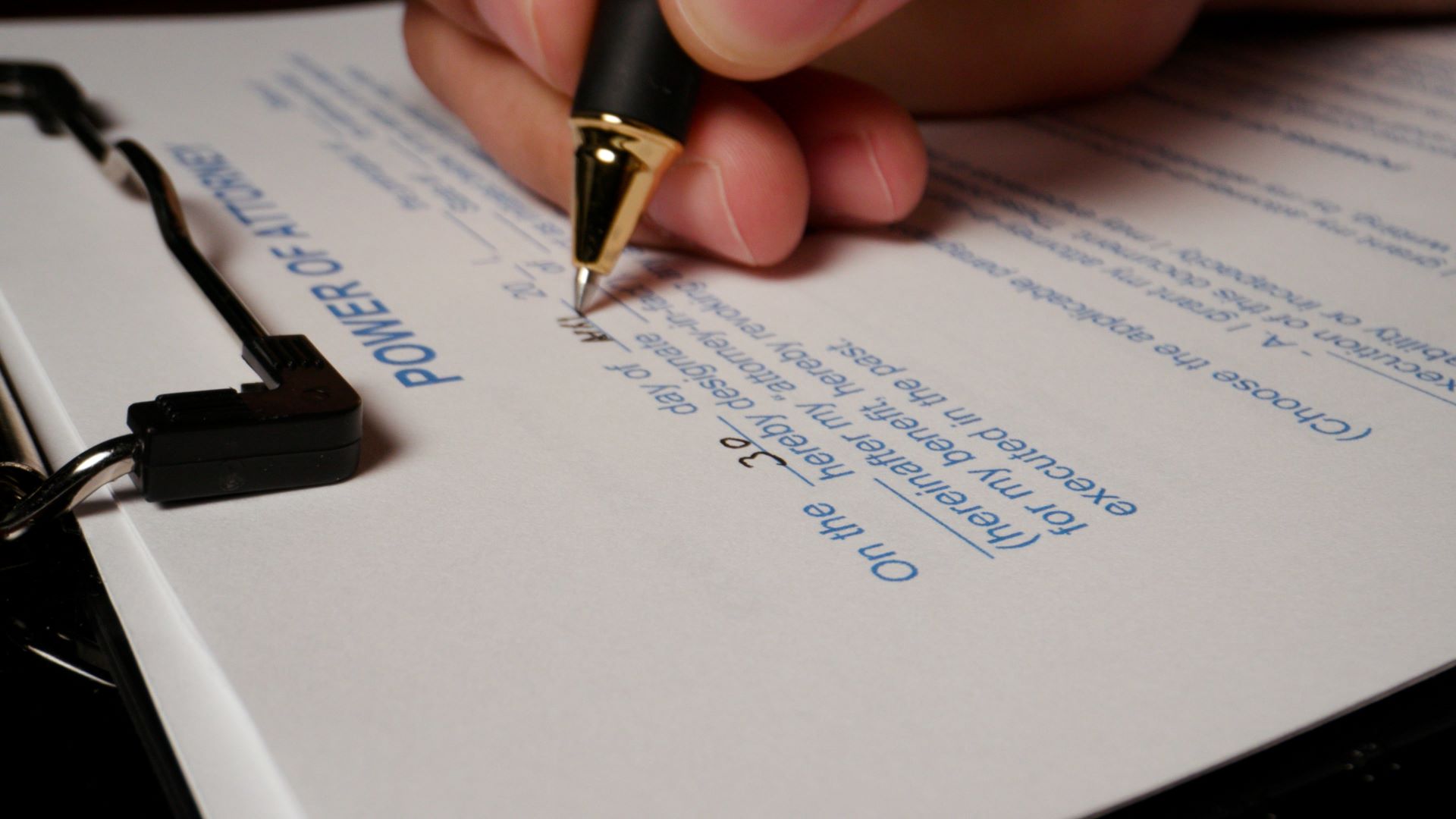
Closeup of man holding a pen to fill out a power of attorney form.Takeaways

  • A durable power of attorney is a legal document that allows a trusted individual to make financial or health care decisions on your behalf even if you become unable to handle your own affairs.
  • This document provides long-term safeguards, ensuring your affairs are managed without court intervention.

Though you are likely in good health now and can handle your own financial transactions and health care decisions, there is always a chance you could lose that ability. It could happen suddenly, as with a car accident, or gradually, as with dementia. Planning for the possibility of incapacity is an important part of estate planning.

In creating an estate plan, your attorney will ask you to nominate people you trust to make financial and health care decisions on your behalf if you ever become unable to do so. Your completed estate planning packet will likely include two different documents addressing these decisions: one document will be for legal and financial matters and the other for medical treatment decisions. These documents are both power of attorney documents.

A power of attorney (POA) is a legal document that allows an individual (known as the principal) to give another person (their agent or attorney-in-fact) the authority to act on their behalf. Though many people are familiar with the general concept of POAs, not everyone understands the different types of powers of attorney and how they work, especially with regard to durable powers of attorney.

What Is a Durable Power of Attorney?

A durable power of attorney (DPOA) is a POA that remains valid even if the principal becomes incapacitated (unable to make or communicate decisions for themselves). The word “durable” refers to its endurance through someone’s loss of capacity. Without this durability, the authority your agent has would end if you became unable to make your own decisions.

Durable POAs are commonly used in estate planning, health care planning, and financial management. They give family members and trusted individuals the legal authority to step in when needed without having to go through lengthy court proceedings. Because the agent may have broad powers, choosing the right person is crucial. Abuse of POA authority does happen, so it’s best to select someone trustworthy and, if possible, have checks and balances in place.

When creating an estate plan, some people will choose different trusted individuals for their durable general (financial and legal) POA and their durable health care (medical) POA. Making this distinction can help spread the responsibilities among different trusted people. This strategy also considers that some agents would be better at handling financial decisions and others better with medical decisions.

Power of Attorney vs. Durable Power of Attorney

The key difference between a power of attorney and a durable power of attorney is whether the authority survives the principal’s incapacity.

Power of Attorney

If a POA doesn’t explicitly state that it is durable, then in most states it is assumed to be nondurable by default. A nondurable POA is typically used for specific, limited transactions. For example, if someone is traveling abroad, they might grant a POA to a trusted person to sign real estate paperwork while they are away. Once the task is complete, or if the principal becomes incapacitated, the document is no longer valid.

Durable Power of Attorney

durable POA is longer lasting and usually broader in scope. It remains valid even if the principal experiences a serious injury or illness or cognitive decline. Executing a DPOA can prove particularly important in situations involving aging, chronic illness, or unexpected medical events.

In short, POAs are temporary tools for convenience and durable POAs are safeguards for long-term planning.

Common Uses for Durable Powers of Attorney

A durable POA can cover a wide range of decisions, depending on how it is written. Some common uses include:

  • Decisions regarding financial affairs. Paying bills, managing investments, handling tax returns, and maintaining bank accounts.
  • Real estate transactions. Selling, buying, or managing property if the principal cannot handle the paperwork.
  • Health care decisions. When paired with a health care power of attorney, often a standalone document, the agent may make medical decisions if the principal is incapacitated.
  • Legal matters. Signing contracts or managing lawsuits on behalf of the principal.

Things Many People May Not Know About Durable Powers of Attorney

Despite their importance, durable POAs are often misunderstood. Here are some good things to know about them:

  • They can be as specific as you want. A durable POA doesn’t have to grant blanket authority. The role can be tailored to cover only certain actions, such as managing a single bank account or selling one piece of property.
     
  • They can become effective immediately or upon one’s incapacity. Some DPOAs are effective as soon as they’re signed. These are sometimes referred to as standing DPOAs. Others, known as springing durable POAs, only become effective if the principal becomes incapacitated.

    Some DPOAs can even be both standing and springing – for example, if the principal wants their DPOA to be standing for their spouse but springing for any backup agents.

     
  • They end upon the principal’s death. A durable power of attorney does not replace a will. Once the principal passes away, the agent’s authority under the DPOA ends and the executor named in the principal’s will takes over.
     
  • Banks and institutions may have their own forms. Even if you have a valid POA, some banks or financial institutions require their own internal documents before allowing an agent to act. Plan ahead by contacting your financial institutions to understand their requirements.

Why Everyone Should Consider Having a Durable POA

No one likes to think about losing the ability to manage their own affairs, but the reality is that accidents, illness, or aging can leave anyone vulnerable. Without a durable POA in place, family members might have to go to court to be appointed as a guardian or conservator, a legal process that can be expensive, stressful, and time-consuming.

A durable power of attorney helps ensure that someone you trust is legally empowered to step in when needed, keeping your finances, medical care, and personal matters on track.

Additional Reading

For additional reading on topics related to powers of attorney, check out the following articles:

Contact us

Questions? Contact us at Elise Lampert, Attorney at Law

   
Elise Lampert, Esq.
Law Office of Elise Lampert
9465 Wilshire Blvd. | Suite 300 | Beverly Hills , CA 90212
Phone: (818) 905-0601 / Email: elise@elampertlaw.com