Sunday, September 15, 2019

Will My Advance Directive Work in Another State?

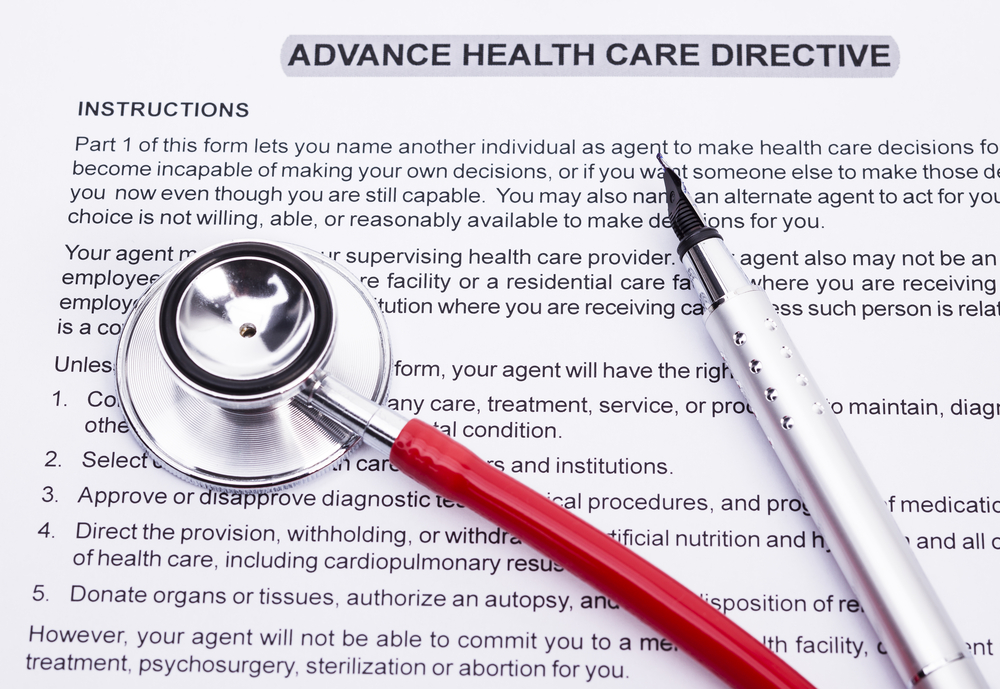
Making sure your end-of-life wishes are followed no matter where you happen to be is important. If you move to a different state or split your time between one or more states, you should make sure your advance directive is valid in all the states you frequent.
An advance directive gives instructions on the kind of medical care you would like to receive should you become unable to express your wishes yourself, and it often designates someone to make medical decisions for you. Each state has its own laws setting forth requirements for valid advance directives and health care proxies. For example, some states require two witnesses, other states require one witness, and some states do not require a witness at all.
Most states have provisions accepting an advance care directive that was created in another state. But some states only accept advance care directives from states that have similar requirements and other states do not say anything about out-of-state directives. States can also differ on what the terms in an advance directive mean. For example, some states may require specific authorization for certain life-sustaining procedures such as feeding tubes while other states may allow blanket authorization for all procedures.
To find out if your document will work in all the states where you live, consult with an attorney in the state. 

Contact us

Questions? Contact us at Elise Lampert, Attorney at Law
   
Elise Lampert, Attorney at Law
9595 Wilshire Blvd. | Suite 900 | Beverly Hills , CA 90212
Phone: 818-905-0601
Email:elise@elampertlaw.com

Wednesday, September 11, 2019

Medi-Cal Asset Transfer Rules

In order to be eligible for Medi-Cal, you cannot have recently transferred assets. Congress does not want you to move into a nursing home on Monday, give all your money to your children (or whomever) on Tuesday, and qualify for Medi-Cal on Wednesday. So it has imposed a penalty on people who transfer assets without receiving fair value in return.

This penalty is a period of time during which the person transferring the assets will be ineligible for Medi-Cal. The penalty period is determined by dividing the amount transferred by what Medi-Cal determines to be the average private pay cost of a nursing home in your state.

Example: If you live in a state where the average monthly cost of care has been determined to be $5,000, and you give away property worth $100,000, you will be ineligible for benefits for 20 months ($100,000 / $5,000 = 20).

Another way to look at the above example is that for every $5,000 transferred, an applicant would be ineligible for Medicaid nursing home benefits for one month. In theory, there is no limit on the number of months a person can be ineligible.

Example: The period of ineligibility for the transfer of property worth $400,000 would be 80 months ($400,000 / $5,000 = 80).

A person applying for Medi-Cal must disclose all financial transactions he or she was involved in during a set period of time -- frequently called the "look-back period." The state Medi-Cal agency then determines whether the Medi-Cal applicant transferred any assets for less than fair market value during this period. The look-back period for all transfers is 60 months (except in California, where it is 30 months). Also, keep in mind that because the Medi-Cal program is administered by the states, your state's transfer rules may diverge from the national norm.

The penalty period created by a transfer within the look-back period does not begin until (1) the person making the transfer has moved to a nursing home, (2) he has spent down to the asset limit for Medi-Cal eligibility, (3) has applied for Medi-Cal coverage, and (4) has been approved for coverage but for the transfer.

For instance, if an individual transfers $100,000 on April 1, 2017, moves to a nursing home on April 1, 2018, and spends down to Medi-Cal eligibility on April 1, 2019, that is when the 20-month penalty period will begin, and it will not end until December 1, 2020.

In other words, the penalty period would not begin until the nursing home resident was out of funds, meaning there would be no money to pay the nursing home for however long the penalty period lasts. In states that have so-called "filial responsibility laws," nursing homes may seek reimbursement from the residents' children. These rarely-enforced laws, which are on the books in 29 states, hold adult children responsible for financial support of indigent parents and, in some cases, medical and nursing home costs. In 2012, a Pennsylvania appeals court found a son liable for his mother's $93,000 nursing home bill under the state's filial responsibility law.

Exceptions

Transferring assets to certain recipients will not trigger a period of Medicaid ineligibility. These exempt recipients include the following:

A spouse (or a transfer to anyone else as long as it is for the spouse's benefit)
A blind or disabled child
A trust for the benefit of a blind or disabled child
A trust for the sole benefit of a disabled individual under age 65 (even if the trust is for the benefit of the Medicaid applicant, under certain circumstances).
In addition, special exceptions apply to the transfer of a home. The Medi-Cal applicant may freely transfer his or her home to the following individuals without incurring a transfer penalty:

The applicant's spouse
A child who is under age 21 or who is blind or disabled
Into a trust for the sole benefit of a disabled individual under age 65 (even if the trust is for the benefit of the Medi-Cal applicant, under certain circumstances)

A sibling who has lived in the home during the year preceding the applicant's institutionalization and who already holds an equity interest in the home
A "caretaker child," who is defined as a child of the applicant who lived in the house for at least two years prior to the applicant's institutionalization and who during that period provided care that allowed the applicant to avoid a nursing home stay.
Congress has created a very important escape hatch from the transfer penalty: the penalty will be "cured" if the transferred asset is returned in its entirety, or it will be reduced if the transferred asset is partially returned. However, some states are not permitting partial returns. Check with your elder law attorney.

Contact us
Questions? Contact us at Elise Lampert, Attorney at Law

Elise Lampert, Attorney at Law
9595 Wilshire Blvd. | Suite 900 | Beverly Hills , CA 90212
Phone: 818-905-0601
Email:elise@elampertlaw.com


http://www.eliselampert.com
Sunday, September 1, 2019

Should You Sell Your Life Insurance Policy?

Older Americans with a life insurance policy that they no longer need have the option to sell the policy to investors. These transactions, called "life settlements," can bring in needed cash, but are they a good idea? 
If your children are grown and your mortgage paid off, you may decide that there is no longer a reason to be paying premiums every month for a life insurance policy, or you may reach a time when you can no longer afford to keep up with the premiums. If this happens, you may be tempted to let the policy lapse and get nothing from it or to surrender the policy for its cash value, which usually is a fraction of its death benefit. Another option is a life settlement. This allows you to sell your policy to an investor for an amount that is greater than the cash value, but less than the death benefit. The buyer pays all future premiums and receives the death benefit when you die. 
Life settlements offer seniors a way to get cash to supplement retirement income and help pay for living expenses, health care, or other needed items. They can be a good alternative to surrendering a policy or letting it lapse. But as with any financial transaction, you need to exercise caution. 
The amount you receive from a life settlement depends on your age, your health, and the terms and conditions of the policy. It is hard to determine if you are getting a fair price for the policy because there are no standard guidelines for life settlements. Before selling you should shop around to several life settlement companies. You should also note that the amount you receive will be reduced by transaction fees, which can eat up a good chunk of the proceeds of the sale. In addition, you may have to pay taxes on the lump sum you receive. Finally, the beneficiaries of your policy may not be pleased with the sale, which is why some life settlement companies require beneficiaries to sign off on the transaction.
Before choosing a life settlement, you should consider other options. If you need cash right away, you can borrow against your policy. If the premiums are too much, you may be able to stop premiums and receive a smaller death benefit. In some cases of terminal illness, you can receive an accelerated death benefit (this allows you to receive a portion of your death benefit while you are still alive). If you don't need the cash but no longer want the policy, another possibility is to donate the policy to charity and get a tax write-off. 
To find out the right solution for you, talk to your elder law attorney or a financial advisor.

Contact us

Questions? Contact us at Elise Lampert, Attorney at Law
Elise Lampert, Attorney at Law
9595 Wilshire Blvd. | Suite 900 | Beverly Hills , CA 90212
Phone: 818-905-0601
Email:elise@elampertlaw.com

Tuesday, August 27, 2019

New Rule Once Again Allows Nursing Home Arbitration Agreements

The Trump administration is officially rolling back a ban on the use of arbitration agreements by nursing homes that was initiated under President Obama. The Centers for Medicare and Medicaid Services (CMS) issued a rule that once again allows nursing facilities to use arbitration to settle disputes with residents. 
Historically, nursing homes increasingly asked -- or forced -- patients and their families to sign arbitration agreements prior to admission. By signing these agreements, patients or family members gave up their right to sue if they believed the nursing home was responsible for injuries or the patient's death. The dispute had to be settled in private arbitration, and any injury to the patient did not have to be disclosed to the public. 
In 2017, CMS issued a final rule prohibiting nursing homes that accept Medicare and Medicaid from entering into binding arbitration agreements with a resident or their representative before a dispute arises. In doing so, CMS cited abundant evidence that resolving disputes behind closed doors was detrimental to the health and safety of nursing home residents. 
The nursing home industry immediately challenged this rule in court and a U.S. district court issued an injunction prohibiting it from going into effect. The Trump administration then announced it was reviewing the rule. 
The new rule, which takes effect on September 16, 2019, allows nursing homes to enter into pre-dispute arbitration agreements with residents, but prohibits nursing homes from requiring residents to sign an arbitration agreement as a condition for admission. The rule also adds a requirement that facilities give residents a 30-day period to rescind their agreement to arbitrate disputes. And it prohibits language in the arbitration agreement that prevents residents from contacting federal or state authorities. 
Although under the new rule nursing homes will not be able to require residents to sign arbitration agreements as a condition of admission, nursing home resident advocacy groups contend that the effect will in many cases be the same as forcing residents to sign.  
“[T]he circumstances surrounding the admissions process combined with the enormous disparity of bargaining power means that most prospective residents are unaware of the content of what they are signing or the significance of the decision to enter into a pre-dispute arbitration agreement,” the group Justice in Aging said in a statement. “In short, allowing facilities to ask residents to sign pre-dispute arbitration agreements is unfair to residents and their families and will harm their rights, safety, and quality of care.” 

Contact us

Questions? Contact us at Elise Lampert, Attorney at Law
Elise Lampert, Attorney at Law
9595 Wilshire Blvd. | Suite 900 | Beverly Hills , CA 90212
Phone: 818-905-0601
Email:elise@elampertlaw.com

Sunday, August 25, 2019

Medi-Cal Gift to Children Who Help Parents Postpone Nursing Home Care

In most states, transferring your house to your children (or someone else) may lead to a Medi-Cal penalty period, which would make you ineligible for Medicaid for a period of time. However, there are circumstances in which transferring a house will not result in a penalty period.

One of those circumstances is if the Medi-Cal applicant transfers the house to a "caretaker child." This is defined as a child of the applicant who lived in the house for at least two years prior to the applicant's entering a nursing home and who during that period provided care that allowed the applicant to avoid a nursing home stay. In such cases, the Medi-Cal applicant may freely transfer a home to the child without triggering a transfer penalty. Note that the exception applies only to a child, not a grandchild or other relative.

Proof is required showing that the child has lived with the parent and provided the necessary level of care, making it doubly important to consult with your attorney before making this (or any other) kind of transfer.

Others to whom a home may be transferred without Medi-Cal's usual penalty are:

Your spouse

A child who is under age 21 or who is blind or disabled
Into a trust for the sole benefit of a disabled individual under age 65 (even if the trust is for the benefit of the Medicaid applicant, under certain circumstances)
A sibling who has lived in the home during the year preceding the applicant's institutionalization and who already holds an equity interest in the home

Contact us
Questions? Contact us at Elise Lampert, Attorney at Law

Elise Lampert, Esq.
Law Office of Elise Lampert
9595 Wilshire Blvd. | Suite 900 | Beverly Hills , CA 90212
Phone: 818-905-0601
Email:elise@elampertlaw.com
http://eliselampert.com

Friday, July 26, 2019

A Final Retirement Account Distribution Must Still Be Made After Death

Federal law requires that beginning on April 1 of the year after you reach age 70 1/2, you must begin withdrawing a minimum amount from your non-Roth individual retirement account (IRA) or 401(k) accounts. These withdrawals are called required minimum distributions (RMDs).

But what if you die after age 70 1/2 and before all the account funds have been distributed? In the eyes of the law, death is no excuse not to take RMDs from an IRA or 401(k). Your heirs must take the final RMD before they can take control of the account.  
Congress created the rules governing the minimum distribution of retirement plan funds to encourage saving for retirement and to allow retirement assets to build up tax-free during the plan owner's working years. But lawmakers built in provisions so the money wouldn’t simply keep accumulating tax-free forever. The funds you withdraw are treated as taxable income in the year you take the distribution. If you don’t start taking the RMDs from your retirement accounts and pay taxes on the withdrawals, you will face a 50 percent penalty on what should have been withdrawn but wasn’t.
The rules for inheriting an IRA as a spouse are different than the rules for a non-spouse beneficiary, but regardless of who is inheriting the IRA, the heir must take the RMD for the year the account owner died. The full RMD must be taken by December 31 in the year the account owner died, even if he or she died at the beginning of the year. To take the RMD, beneficiaries must contact the custodian of the account and submit a death certificate. If the account owner died before he or she was required to begin distributions, then the beneficiaries do not need to take an RMD. 
The money from the RMD will go directly to the beneficiary listed on the account, not the estate. That means it will be taxable income for the beneficiary. If there is more than one beneficiary, it will be split evenly. 
To find out the best way to deal with an inherited IRA, contact your attorney. 

Contact us

Questions? Contact us at Elise Lampert, Attorney at Law
Elise Lampert, Attorney at Law
9595 Wilshire Blvd. | Suite 900 | Beverly Hills , CA 90212
Phone: 818-905-0601
Email:elise@elampertlaw.com

Sunday, July 21, 2019

Medicare Launches App to Help Beneficiaries Find Out What's Covered

At the doctor's office and want to know if a procedure is covered by Medicare? There is an app for that. Medicare has launched a free app that gives beneficiaries a quick way to see whether the program covers a specific medical item or service. 
The "What's Covered" app allows you to search or browse to learn what's covered and not covered under Medicare Parts A and B, how and when to get covered benefits, basic cost information and other eligibility details. You can also see a list of covered preventive services. The app does not give results for extra benefits that Medicare Advantage plans may cover but that Original Medicare does not, such as certain vision, hearing or dental benefits. 
Examples of the types of questions the app can answer include:
  • When are mammograms covered?
  • Is home health care covered?
  • Will Medicare pay for diabetes supplies?
  • Can I get a regular cervical cancer screening?
  • Will my Medicare benefits cover a service to help me stop smoking?
Although the app provides beneficiaries with basic information, it doesn’t provide personalized information. It doesn't ask details about each user's specific insurance information, so it doesn't take into account the user's supplemental insurance, co-insurance, and deductibles. Essentially, the app provides another way for Medicare beneficiaries to get the same information that is available online and in the Medicare handbook.
The app is part of an initiative by the Centers for Medicare and Medicaid Services (CMS) focused on modernizing Medicare and empowering beneficiaries. Other initiatives include:
  • Enhanced interactive online decision support to help beneficiaries better understand and evaluate the coverage options and costs of original Medicare compared to Medicare Advantage plans.
  • New price transparency tools that let consumers compare the national average costs of certain procedures between settings, so people can see what they’ll pay for procedures done in a hospital outpatient department versus an ambulatory surgical center. 
  • A new webchat option in the Medicare Plan Finder.  
  • New easy-to-use surveys across Medicare.gov so consumers can tell CMS what they want.
To get the new "What's Covered" app, go here: https://www.medicare.gov/blog/whats-covered-mobile-app.

Contact us

Questions? Contact us at Elise Lampert, Attorney at Law
Elise Lampert, Attorney at Law
9595 Wilshire Blvd. | Suite 900 | Beverly Hills , CA 90212
Phone: 818-905-0601
Email:elise@elampertlaw.com

Sunday, July 14, 2019

How Gifts Can Affect Medi-Cal Eligibility

We’ve all heard that it’s better to give than to receive, but if you think you might someday want to apply for Medi-Cal long-term care benefits, you need to be careful because giving away money or property can interfere with your eligibility.
Under federal Medi-Cal law, if you transfer certain assets within five years before applying for Medi-Cal, you will be ineligible for a period of time (called a transfer penalty), depending on how much money you transferred. Even small transfers can affect eligibility. While federal law allows individuals to gift up to $15,000 a year (in 2019) without having to pay a gift tax, Medi-Cal law still treats that gift as a transfer.
Any transfer that you make, however innocent, will come under scrutiny. For example, Medi-Cal does not have an exception for gifts to charities. If you give money to a charity, it could affect your Medi-Cal eligibility down the road. Similarly, gifts for holidays, weddings, birthdays, and graduations can all cause a transfer penalty. If you buy something for a friend or relative, this could also result in a transfer penalty.
Spending a lot of cash all at once or over time could prompt the state to request documentation showing how the money was spent. If you don't have documentation showing that you received fair market value in return for a transferred asset, you could be subject to a transfer penalty.
While most transfers are penalized, certain transfers are exempt from this penalty. Even after entering a nursing home, you may transfer any asset to the following individuals without having to wait out a period of Medi-Cal ineligibility:
your spouse
your child who is blind or permanently disabled
a trust for the sole benefit of anyone under age 65 who is permanently disabled
In addition, you may transfer your home to the following individuals (as well as to those listed above):
your child who is under age 21
your child who has lived in your home for at least two years prior to your moving to a nursing home and who provided you with care that allowed you to stay at home during that time
a sibling who already has an equity interest in the house and who lived there for at least a year before you moved to a nursing home
Before giving away assets or property, check with your attorney to ensure that it won't affect your Medi-Cal eligibility.
Contact us
Questions? Contact us at Elise Lampert, Attorney at Law
Elise Lampert, Attorney at Law
9595 Wilshire Blvd. | Suite 900 | Beverly Hills , CA 90212
Phone: 818-905-0601
Email:elise@elampertlaw.com
http://www.eliselampert.com
Try sharing this post to your Page's story.